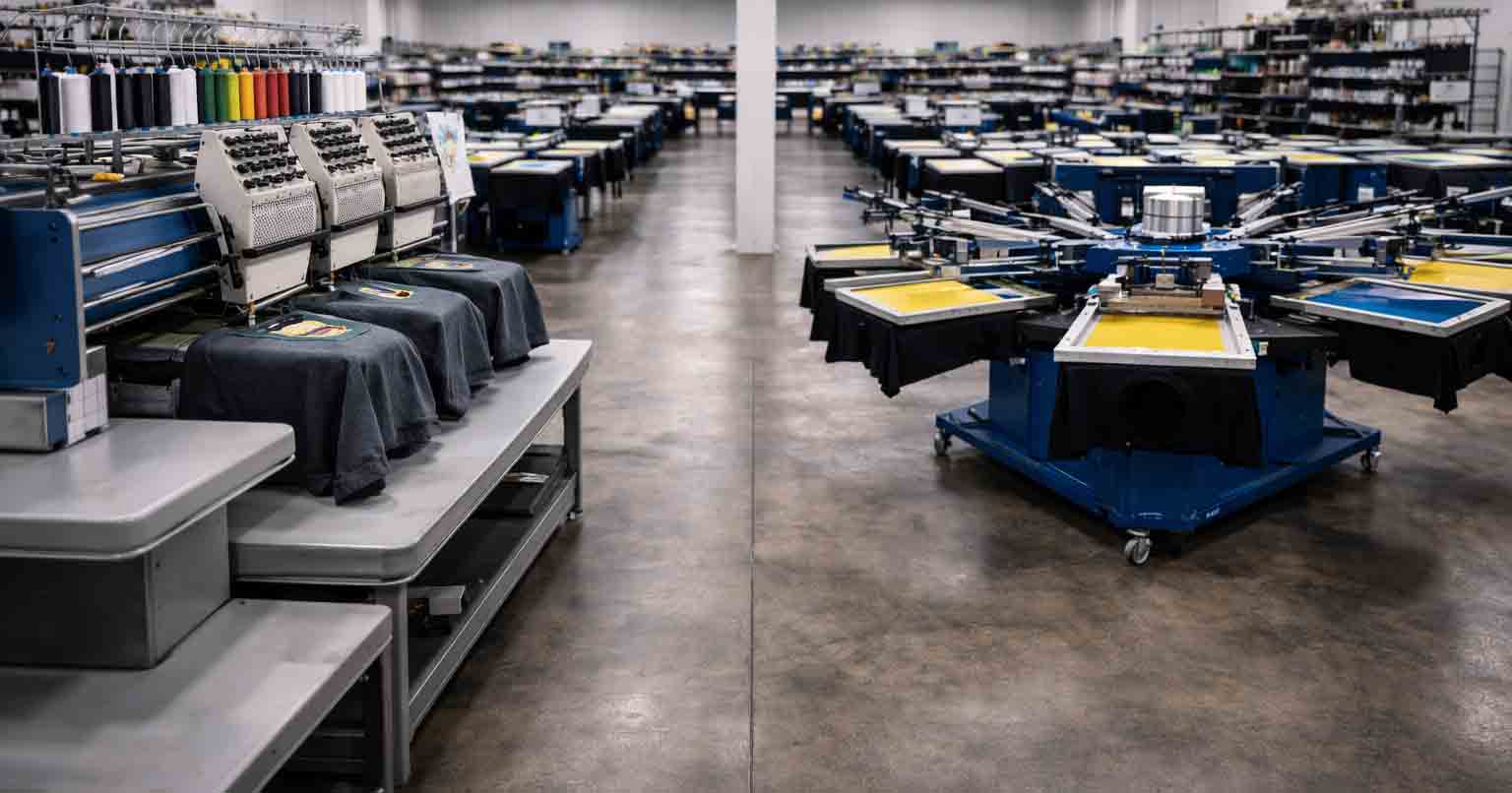
Embroidery vs Screen Print
If you’re choosing decoration for merch, the decision is rarely about “which looks coolest.” It’s about feel, durability, cost, and how consistent you can stay across reorders. This guide helps you choose the right method for your product and audience—without overthinking it.
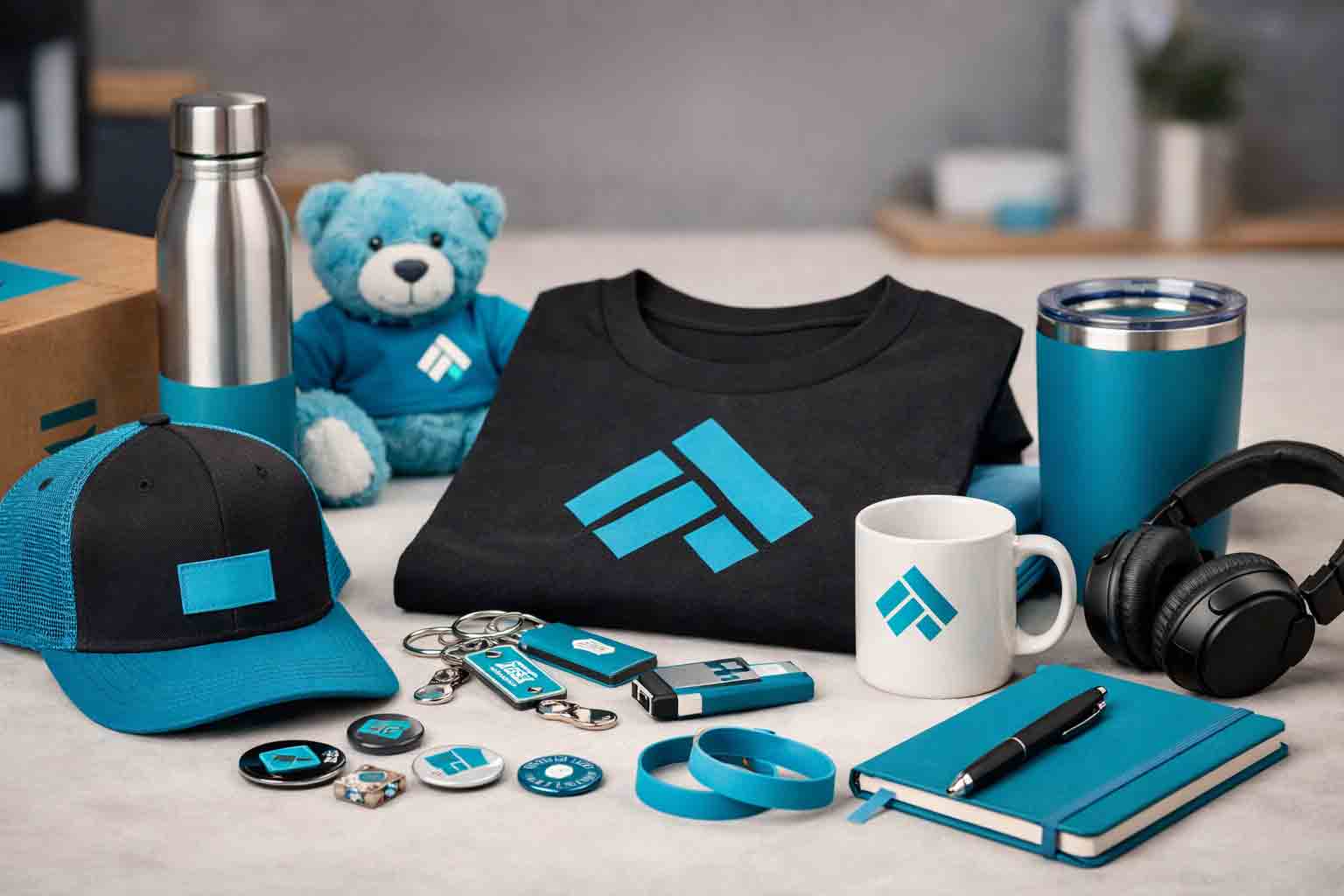
In practice, embroidery signals premium craftsmanship, while screen printing can deliver bold, scalable graphics. Fabrikk helps brands pick the method that matches the garment, the design, and the commercial goal—so the final product feels intentional and sells.
What customers notice first: feel, weight, and “premium signals”
People decide fast whether merch feels premium. They’ll touch the decoration, stretch the fabric, and look for clean finishing. Embroidery is naturally tactile and dimensional, which often reads “high-end” right away. Screen printing can feel softer or heavier depending on ink type and design coverage.
A practical rule: if your brand wants a subtle, long-lasting mark (like a small chest logo), embroidery often wins. If you need high-impact visuals (large back prints, bold front designs), screen printing can be the workhorse—especially at volume.
Embroidery: best use cases, limits, and how to keep it clean
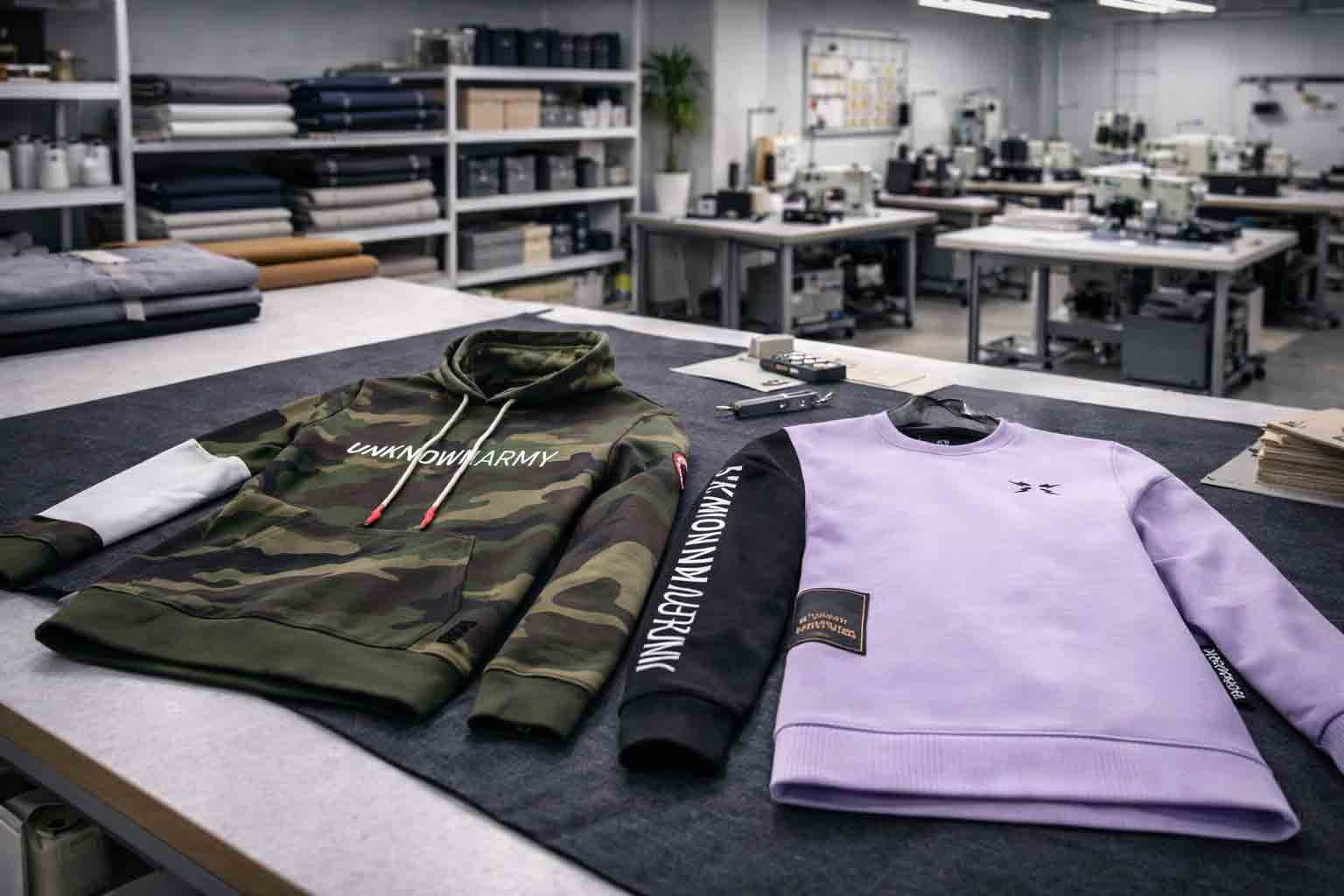
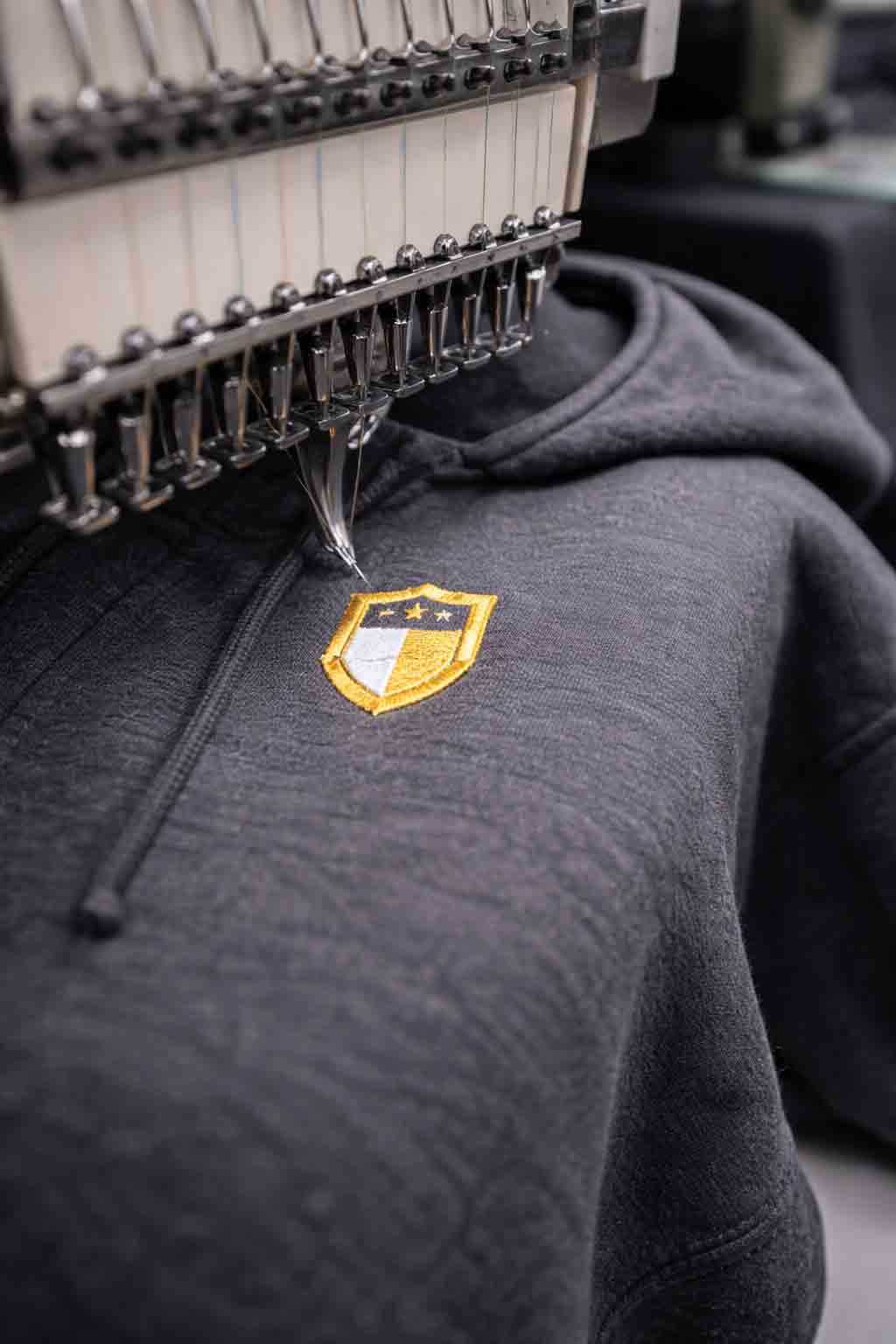
Embroidery is stitching thread into fabric. That makes it durable and premium-looking, especially on heavier garments like hoodies, crewnecks, jackets, and caps. It also holds up well to frequent wear because it’s not a surface layer that can crack.
The main limitations are detail and cost. Very tiny text, ultra-thin lines, and complex gradients don’t translate well into thread. You’ll get the best results by simplifying the design and choosing the right stitch style (like satin or fill stitching) with enough spacing so details don’t merge.
Hands-on tip: aim for bold shapes, clean outlines, and a size that lets the stitching breathe. That’s how embroidery stays sharp instead of “muddy.”
Screen printing: why it scales so well for merch and teams
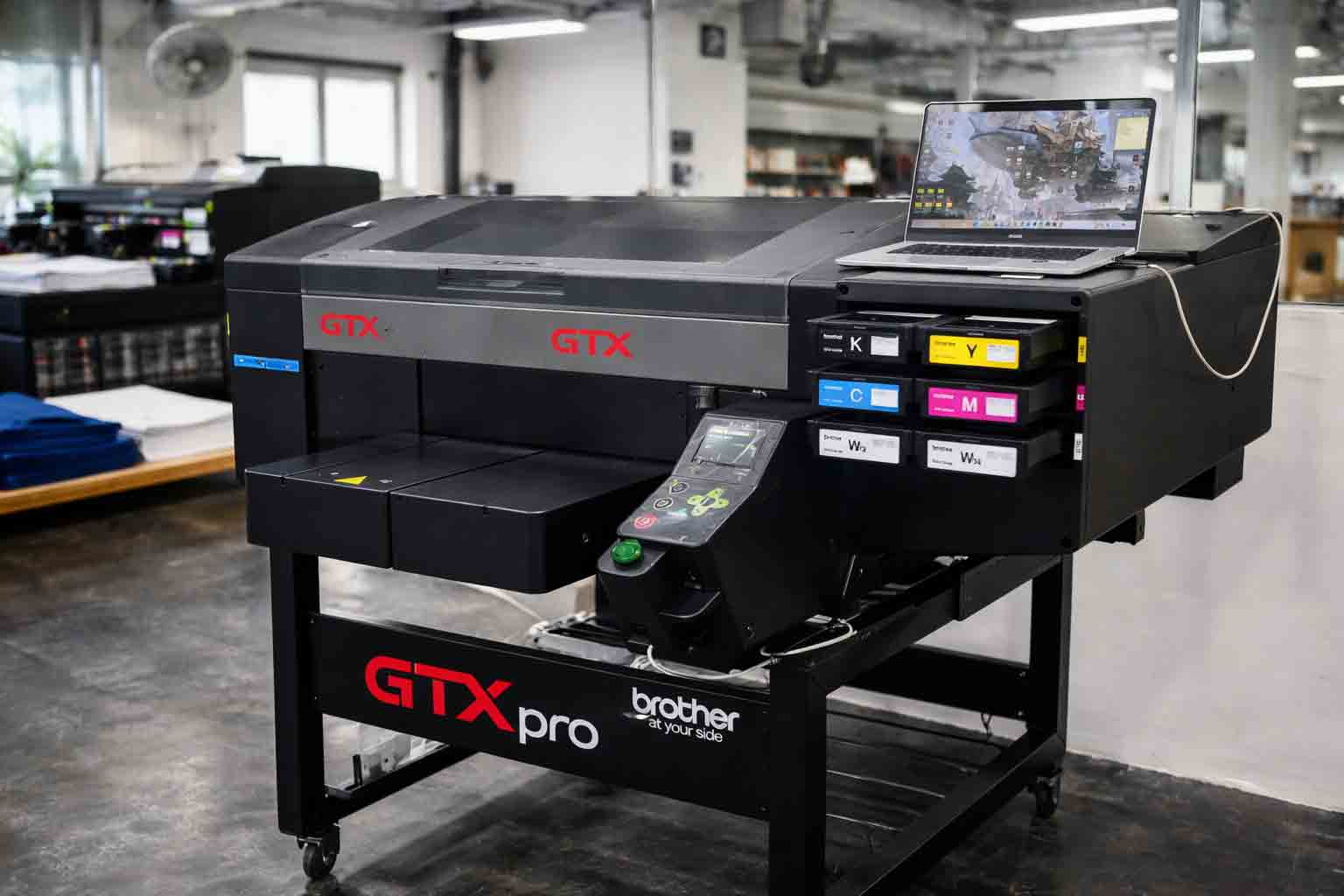
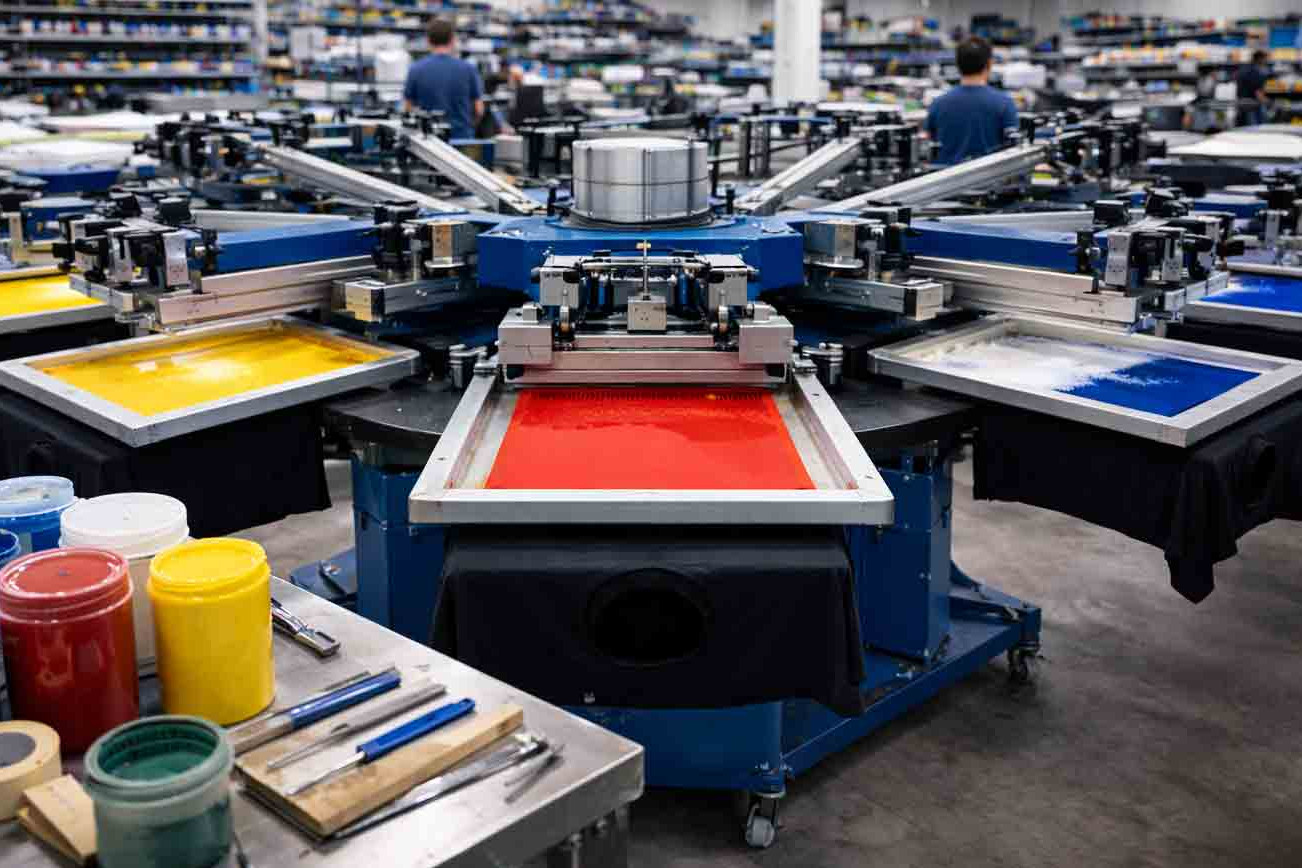
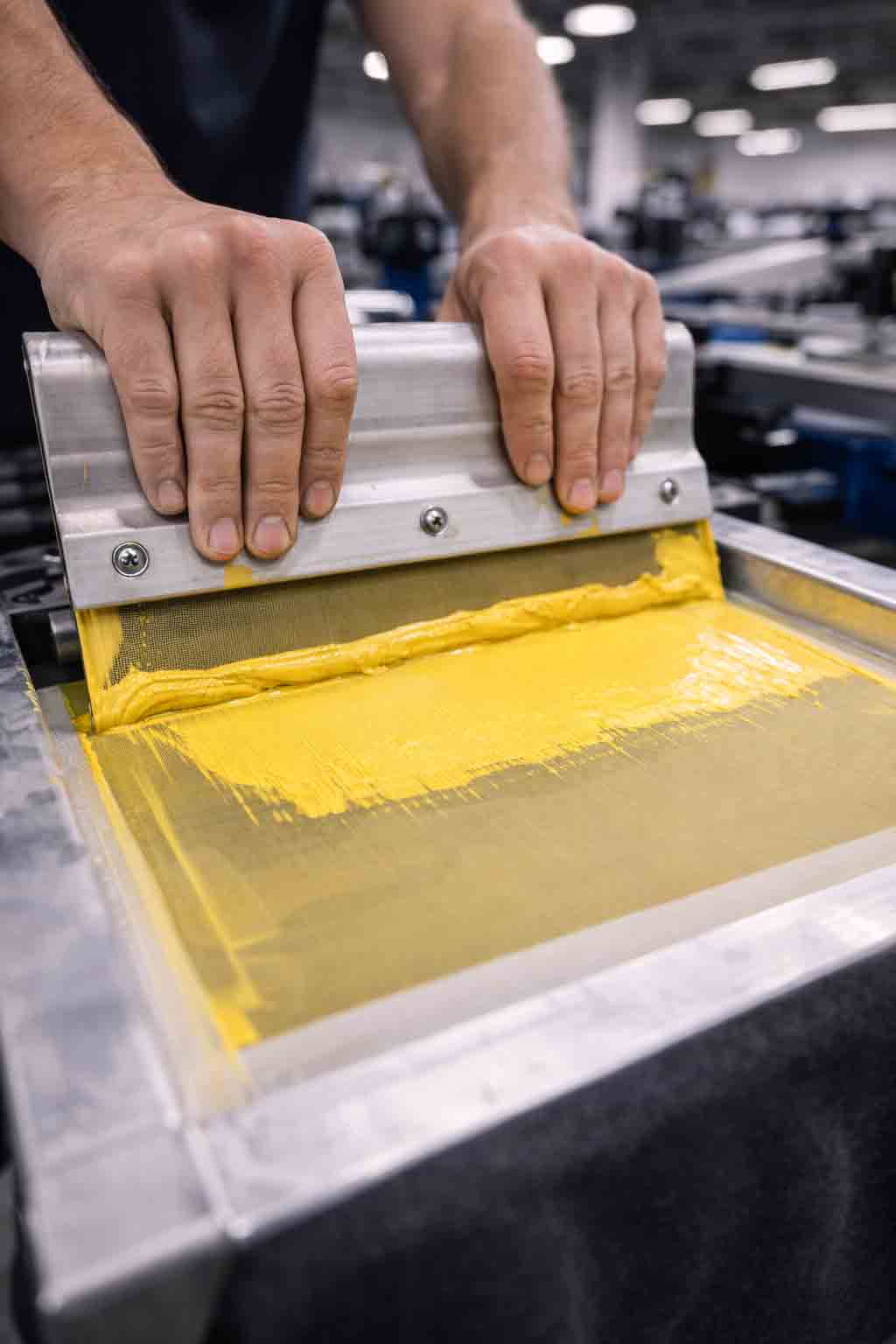
Screen printing pushes ink through a mesh stencil onto fabric. It’s a proven method for repeatable designs and larger runs because once your setup is ready, the unit cost often drops as volume increases. That makes it ideal for event merch, core collections, and uniform programs.
The print “hand feel” depends on ink type and coverage. Smaller marks can feel lightweight and comfortable. Large solid blocks can feel heavier—so design choices matter as much as the print method itself.
Durability and wash performance: what fails in real life
Most quality complaints come from two things: decoration wear after washing and inconsistent results between batches. Embroidery is typically very stable when stitched properly. Screen printing can be extremely durable too, but only when curing and ink deposit are controlled.
For a simple background overview of the process, you can reference: Screen printing (overview).
How Fabrikk helps you choose and standardize for reorders
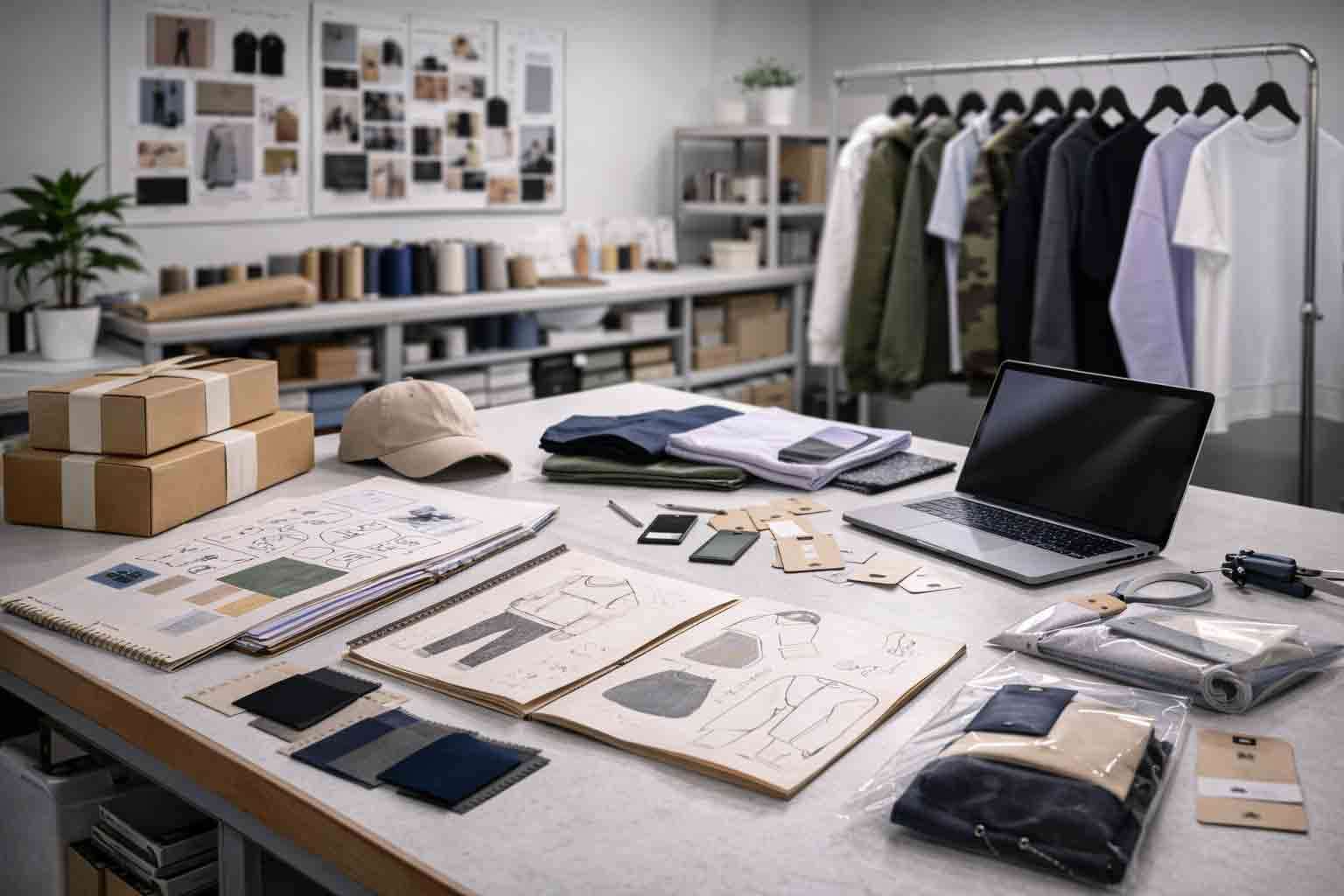
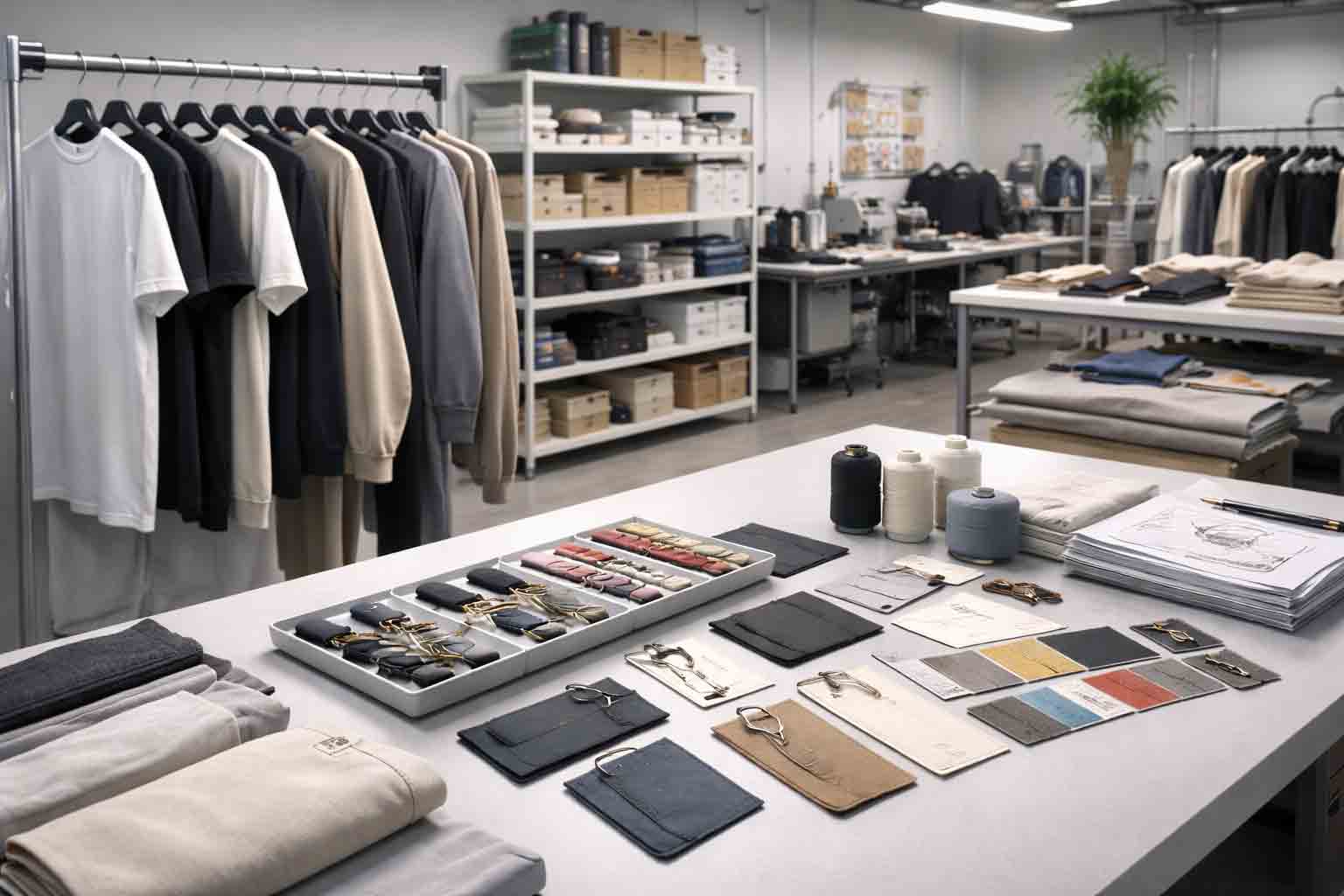
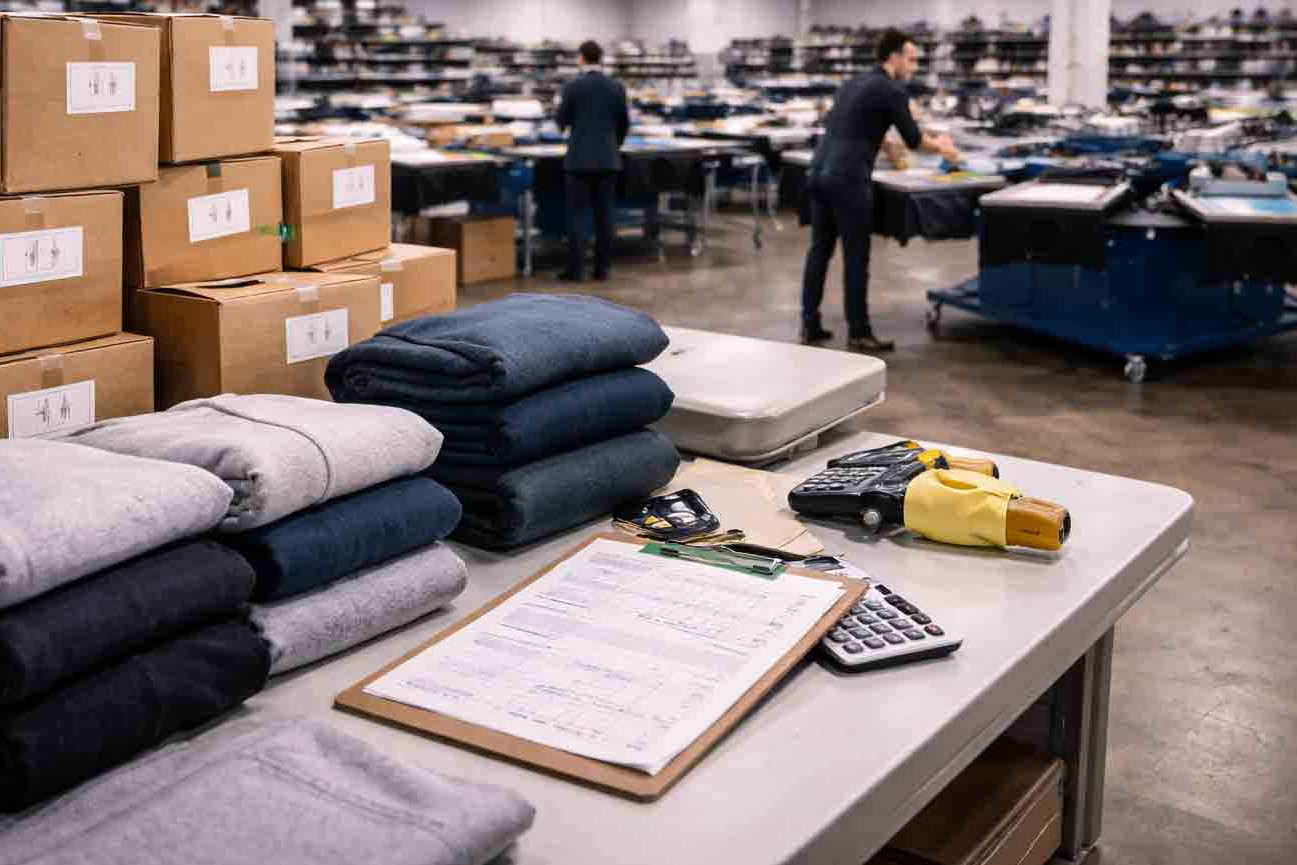
Brands don’t just need one great batch—they need reorders that match. Fabrikk helps you decide the best decoration per garment type, then keeps the system repeatable: artwork readiness, placement standards, and quality checkpoints that protect your brand reputation.
Here’s what brands typically want most:
- Clear method choice per product: tees vs hoodies vs caps vs outerwear.
- Premium finishing: decoration that matches the garment’s quality level.
- Consistency at scale: predictable results when you reorder or expand sizes.
- Less operational chaos: fewer surprises, fewer returns, smoother launches.
Decision checklist: choose the right method in 5 minutes
Use this checklist to make a fast, commercial decision that fits a broad audience.
- Is the garment heavy (hoodie/cap/jacket) or lightweight (tee) in daily use?
- Do you want a subtle premium mark, or a bold high-impact graphic?
- Is the artwork simple shapes, or does it rely on tiny details and gradients?
- How important is a soft hand-feel for the customer experience?
- What’s your expected volume (small drop vs larger run with reorders)?
- Will you offer many colorways (complexity increases quickly)?
- Is the design mostly one placement (chest) or multiple placements (chest + back + sleeve)?
- Do you need the decoration to stretch a lot (activewear) or stay structured?
- Have you tested wash behavior on the exact garment base?
- Is your artwork prepared for production (simplified for stitching or separated for inks)?
- Do you have a reference sample to match future reorders?
- Can you document settings (thread colors / ink mixes / curing) for consistency?
If you can answer these, the right method usually becomes obvious—and your production stays predictable.
FAQ: common questions brands ask
Embroidery often reads premium because it’s dimensional and tactile. But premium screen printing is also possible with clean artwork, correct inks, and proper curing.
Embroidery is excellent for hoodies when you want a clean, durable chest mark. Screen printing works well too for bold graphics—especially for back prints.
Often yes, because it’s stitched into the garment. Screen prints can also last a long time when cured correctly and designed with sensible coverage.
Small text can be tricky. Simple fonts, larger size, and good spacing help. If the design relies on tiny detail, printing may be a safer choice.
It can, but complexity increases. For photo-style artwork on small runs, other methods may be more practical. For bold designs, screen printing is often ideal.
Ink type and design coverage. Large solid areas usually feel heavier. Smaller marks and breathable layouts tend to feel more comfortable.
Stitch count, design size, and complexity. More stitches usually means more production time and higher cost.
Embroidery is a popular choice for caps because it holds shape and looks premium. Printing can work but is often more limited on curved panels.
Screen printing often performs well for larger runs because it scales efficiently once setup is complete.
Use a reference sample, standardize placement, document settings (thread/ink), and run basic QC checks on each batch.
Yes. Many brands use embroidery for subtle premium items and screen printing for bold statement pieces. The key is keeping the collection cohesive.
Decide based on the garment and goal: subtle premium mark → embroidery; bold scalable graphic → screen printing. Then validate with one sample before scaling.
Wrap-up: pick the method that fits the product and scales cleanly
The smartest choice is the one that matches your garment, artwork, and customer expectations—and stays consistent when you reorder. If you’re weighing embroidery vs screen print for a broad audience, start with a tight product plan, pick the method that supports your premium promise, and build a repeatable workflow with Fabrikk.