what is MOQ
Minimum Order Quantity (MOQ) is the smallest number of units a supplier will produce per product, per color, or per variation. It’s a normal part of manufacturing—and it’s one of the biggest levers that affects your cost price, risk, and how quickly you can launch.
In apparel and merch, MOQ isn’t “good” or “bad.” It’s a tool. The smart move is knowing what drives it, what you can negotiate, and how to plan your collection so you don’t get stuck with dead stock.
Why MOQs exist (and what suppliers are protecting)
Suppliers set MOQs because production has fixed setup work. Even before the first unit is made, there’s time and cost in ordering materials, preparing machines, setting colors, and running quality checks. At low quantities, those fixed costs get spread across fewer items, so pricing becomes inefficient.
In practical terms, MOQs help suppliers protect capacity and consistency. The more stable the run (fewer changes, fewer materials, fewer placements), the easier it is for a factory to deliver predictable results.
What changes MOQ in apparel: the real drivers
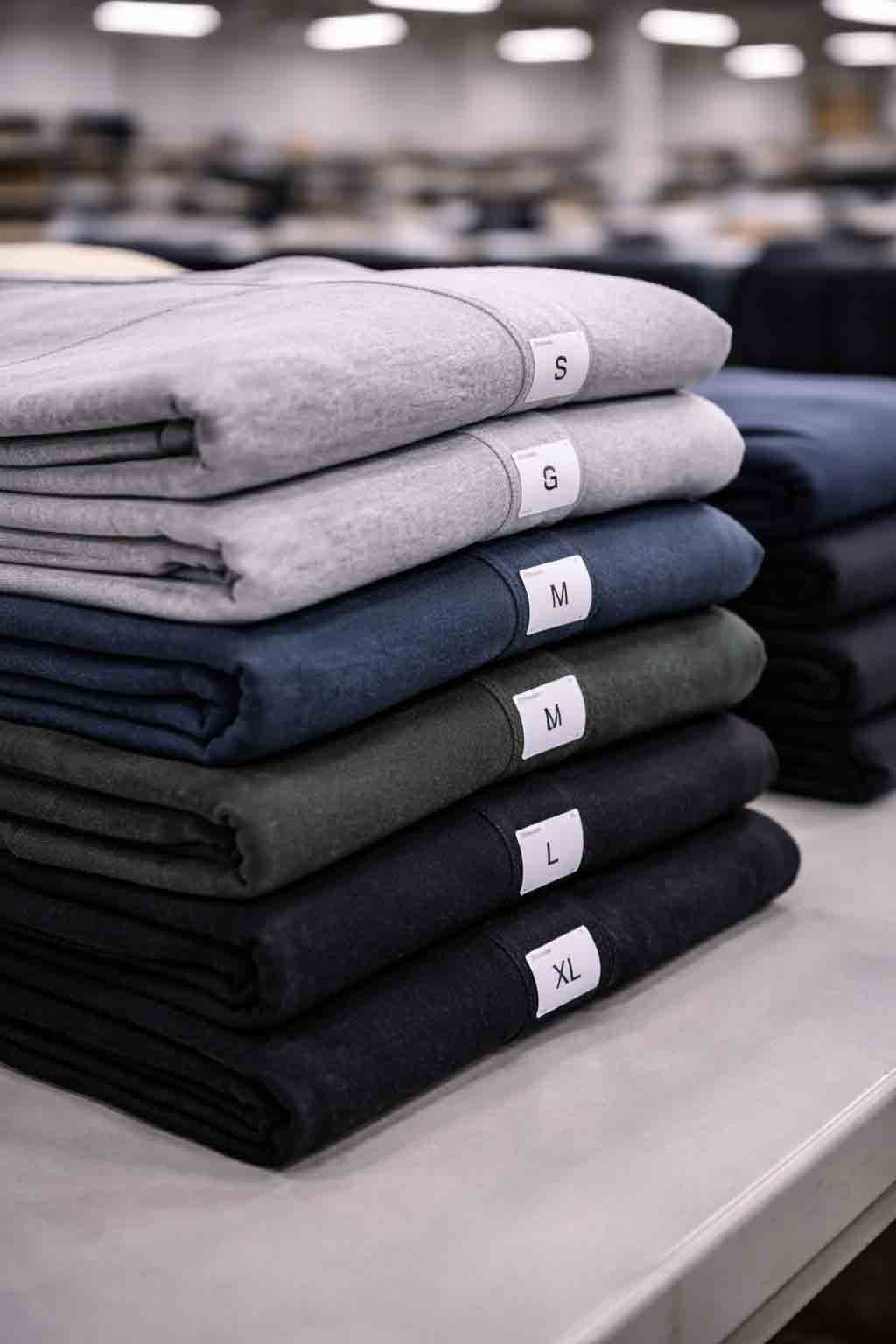
MOQs can apply to different “levels.” Sometimes it’s per style (one hoodie), sometimes per color, and sometimes per size breakdown. The reason is simple: each change creates extra planning, stock handling, and setup work.
Common drivers that push MOQs up:
- Custom materials: special fabric, custom dye, unique trims.
- Many colorways: each color can behave like a mini-production run.
- Complex decoration: multiple print placements or heavy embroidery.
- Packaging requirements: custom hangtags, special inserts, retail packing.
- Short timelines: rush production usually limits flexibility.
If you want a lower MOQ, simplify the “moving parts” first—then negotiate.
MOQ vs price: the trade-off you can actually control
Lower quantity usually means higher unit cost. Higher quantity usually means lower unit cost. But the cheapest unit isn’t always the smartest decision—because cash tied up in inventory is also a cost (storage, slow sales, markdowns, and returns).
A commercial approach is to decide what you’re optimizing for: profit per unit, total cash risk, or speed to market. For many brands, the best first step is proving demand with a tight collection and a conservative quantity—then scaling the winners.
How to negotiate MOQ without damaging quality
Negotiation works best when you’re flexible in the right places. Instead of asking “Can you lower MOQ?” ask “Which part of this setup causes the MOQ, and what would reduce it?” Suppliers often have options—like using stock fabrics, reducing colorways, or standardizing trims.
Practical levers that often help:
- Use a stock fabric instead of a custom-milled fabric.
- Limit colors at launch and add more only after demand is proven.
- Bundle sizes under one MOQ structure (avoid micro-quantities per size).
- Start with one placement (e.g., small chest) and expand later.
If you want a neutral reference definition of the concept, see: Minimum order quantity (overview).
How Fabrikk helps brands work with MOQs (without overbuying)
The fastest way to get into trouble is launching too many products with too many variations. Fabrikk helps brands plan smarter: build a focused collection, choose production-friendly materials, and set quantities that match real demand instead of guesswork.
Typical “MOQ-safe” moves that keep launches commercial:
- Start with a hero product: one tee or hoodie that carries the drop.
- Keep variants tight: fewer colors, fewer trims, simpler placements.
- Prioritize reorders: plan for scaling winners instead of stocking everything.
- Protect quality: don’t trade MOQ for shortcuts that hurt durability.
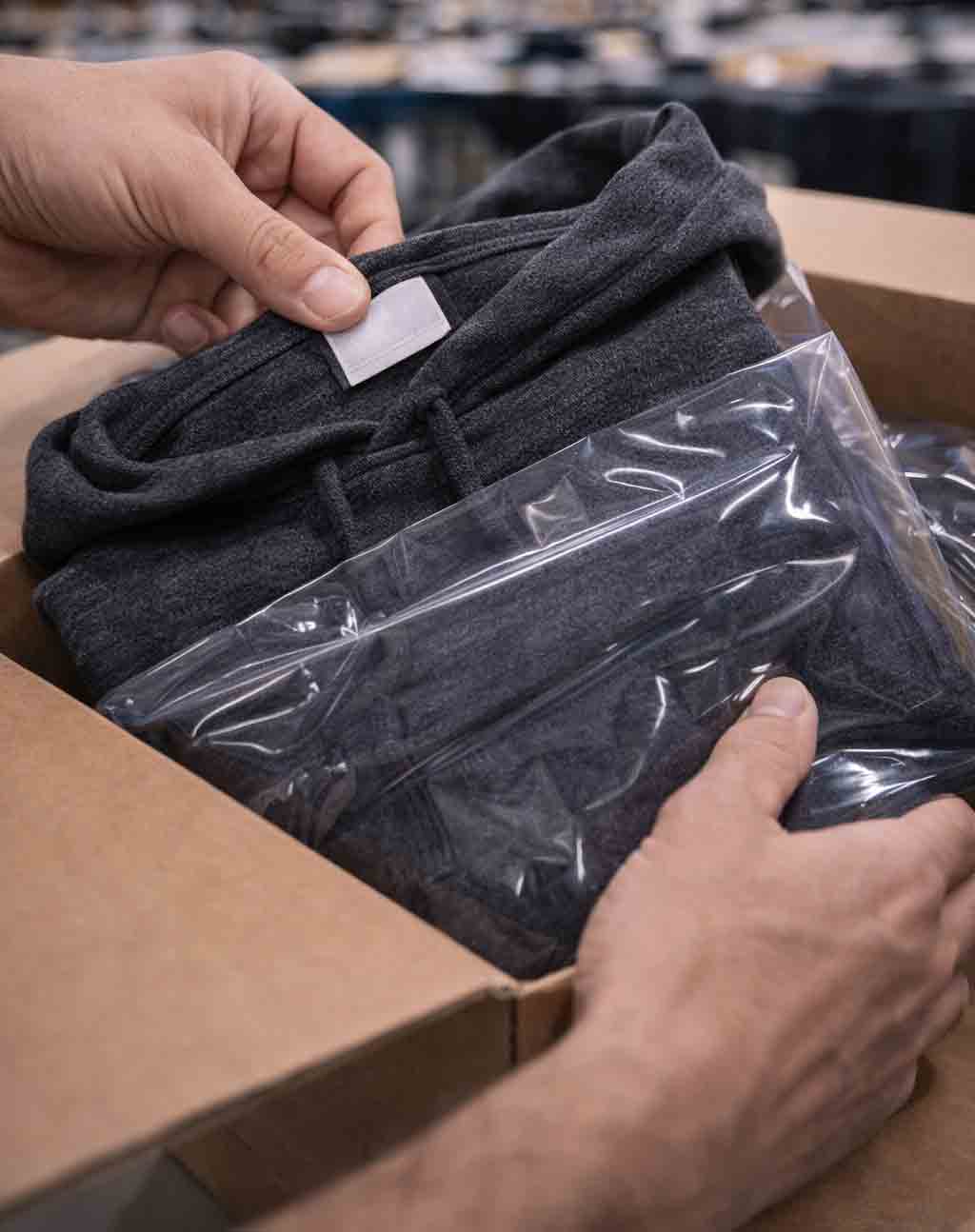
MOQ planning checklist: reduce risk and launch smarter
Use this checklist to plan quantities without getting stuck with the wrong stock.
- Define your hero product (the one item you’ll happily reorder).
- Limit colorways at launch (expand after demand is proven).
- Keep decoration placements simple on the first run.
- Confirm whether MOQ is per style, per color, or per size breakdown.
- Ask which component drives MOQ (fabric, dye, trims, print setup, packing).
- Use stock materials where possible to lower minimums.
- Plan bundles to increase average order value (and move stock faster).
- Forecast conservative sell-through (assume you won’t sell out instantly).
- Set a reorder trigger based on velocity (don’t wait until you’re empty).
- Test one sample for fit, wash behavior, and finishing before scaling.
- Document final specs so reorders match the first batch.
- Decide your exit plan for slow movers (bundle, promo, limited discount).
If you follow these steps, MOQ becomes a planning tool—not a blocker.
FAQ: MOQ questions brands ask all the time
No. It often changes by product type, fabric, colorways, decoration method, and whether components are custom or stock.
Yes. Many suppliers set minimums per color because dyeing, setup, and material planning can be treated like separate runs.
Custom fabrics require dedicated sourcing, production, and often minimum yardage. That fixed work drives higher minimums.
Use stock fabrics, reduce variants, simplify decoration, and standardize trims. Those changes reduce complexity while keeping the product premium.
Not always. A lower unit price can be canceled out by slow stock, storage, and markdowns. Optimize for healthy sell-through first.
MOQ is the minimum for a production run. Reorder quantity is what you choose to order next based on demand. Good brands plan reorders early.
They can. Multiple placements, many colors, or complex embroidery can increase setup and quality control needs, which can push minimums up.
Start with fewer SKUs, limit colorways, bundle smartly, and scale winners through reorders instead of overbuying everything.
Often yes, but it depends on the supplier’s rules. Many suppliers allow a size run within one style and color.
Ask what the MOQ is based on, what changes would reduce it, what lead times apply, and what quality checks are included.
Rush timelines can reduce flexibility. Some suppliers may require higher minimums or limit customization when speed is critical.
Track sales velocity by size and color, set a reorder trigger, and keep specs documented so reorders match the original batch.
Wrap-up: turn MOQ into a growth advantage
The brands that win don’t fight minimums—they design around them. Focus your first collection, keep variants under control, and plan for reorders based on real demand. That’s how you protect cash, keep quality high, and scale without chaos.