what is screen printing
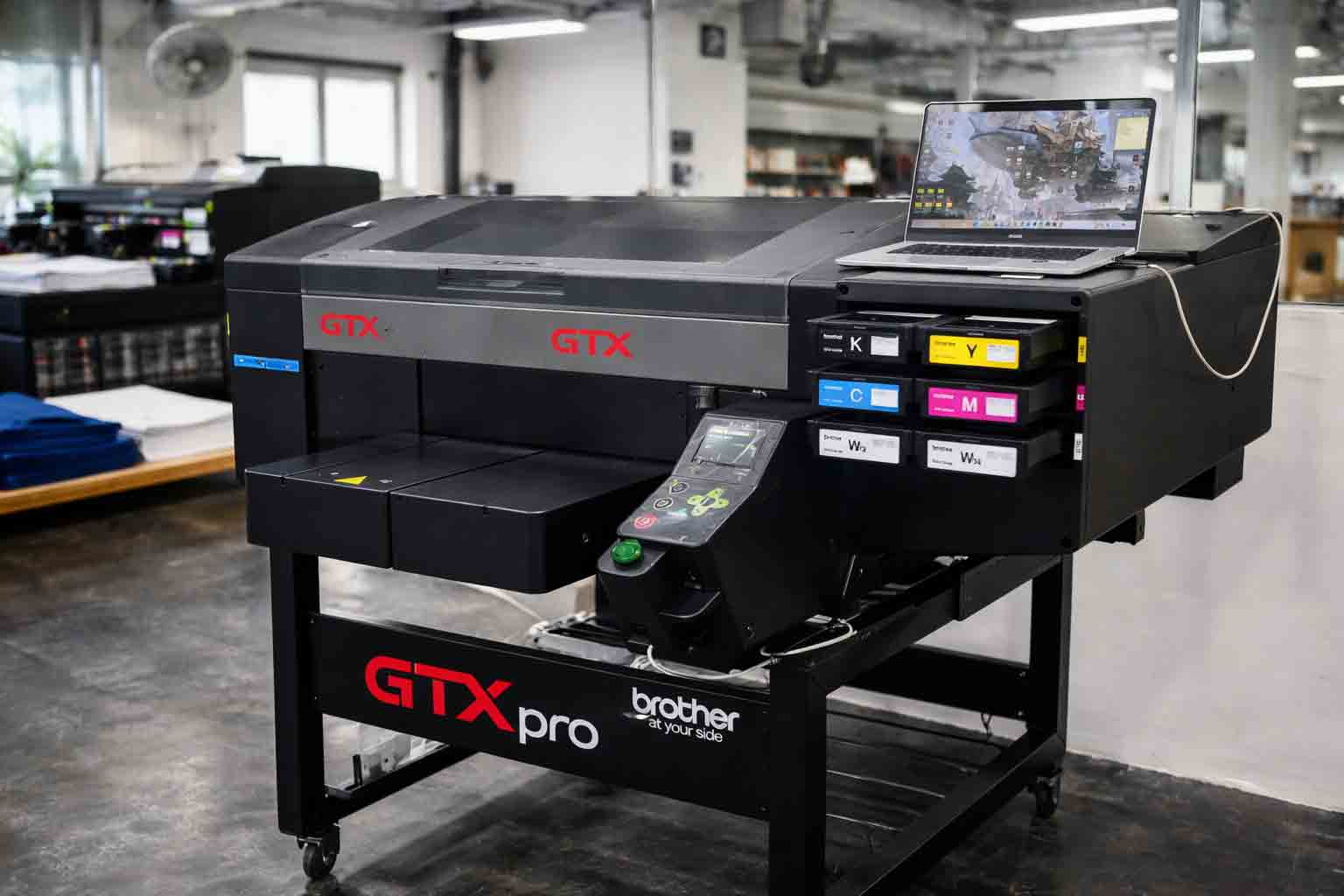
Screen printing is a production method that pushes ink through a mesh screen onto fabric. It’s widely used for merch, uniforms, workwear, and event shirts because it’s reliable at volume and can look extremely clean when the setup is dialed in. Fabrikk helps brands choose the right print approach, manage consistency, and deliver a premium result that holds up.
How screen printing works (the simple, practical explanation)
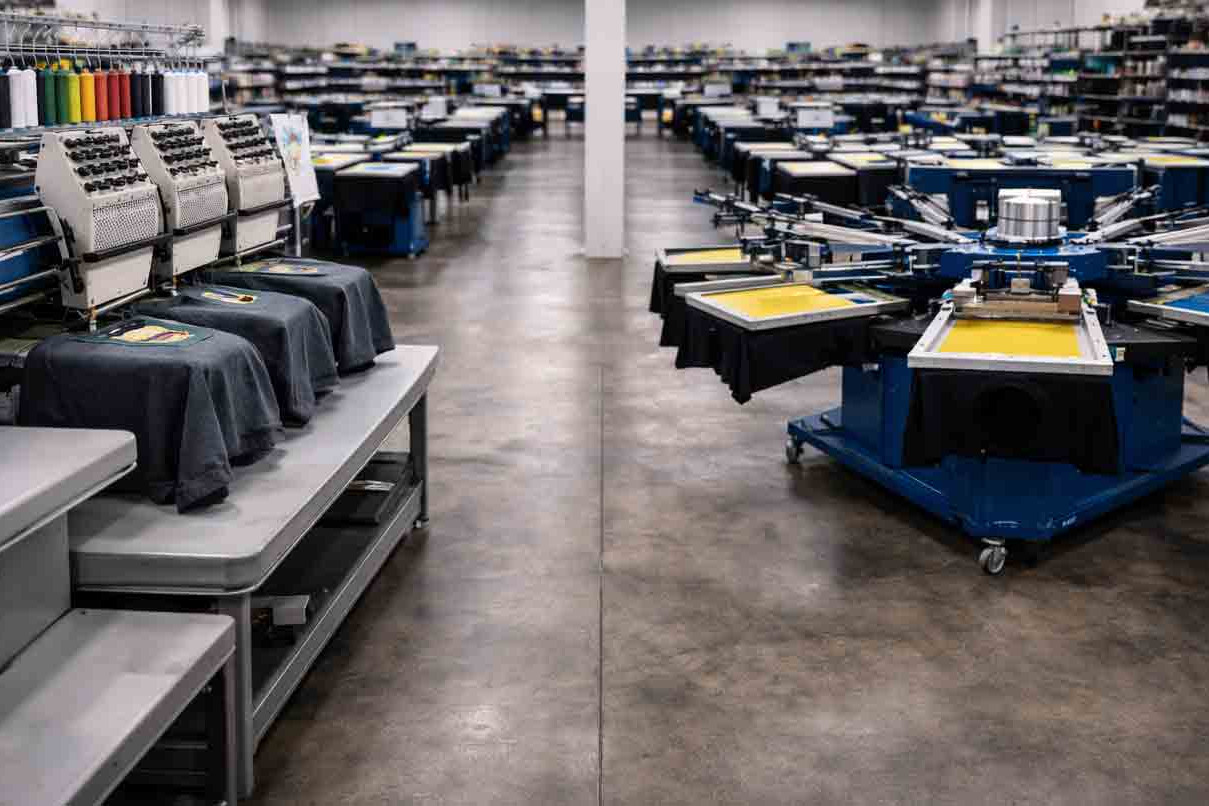
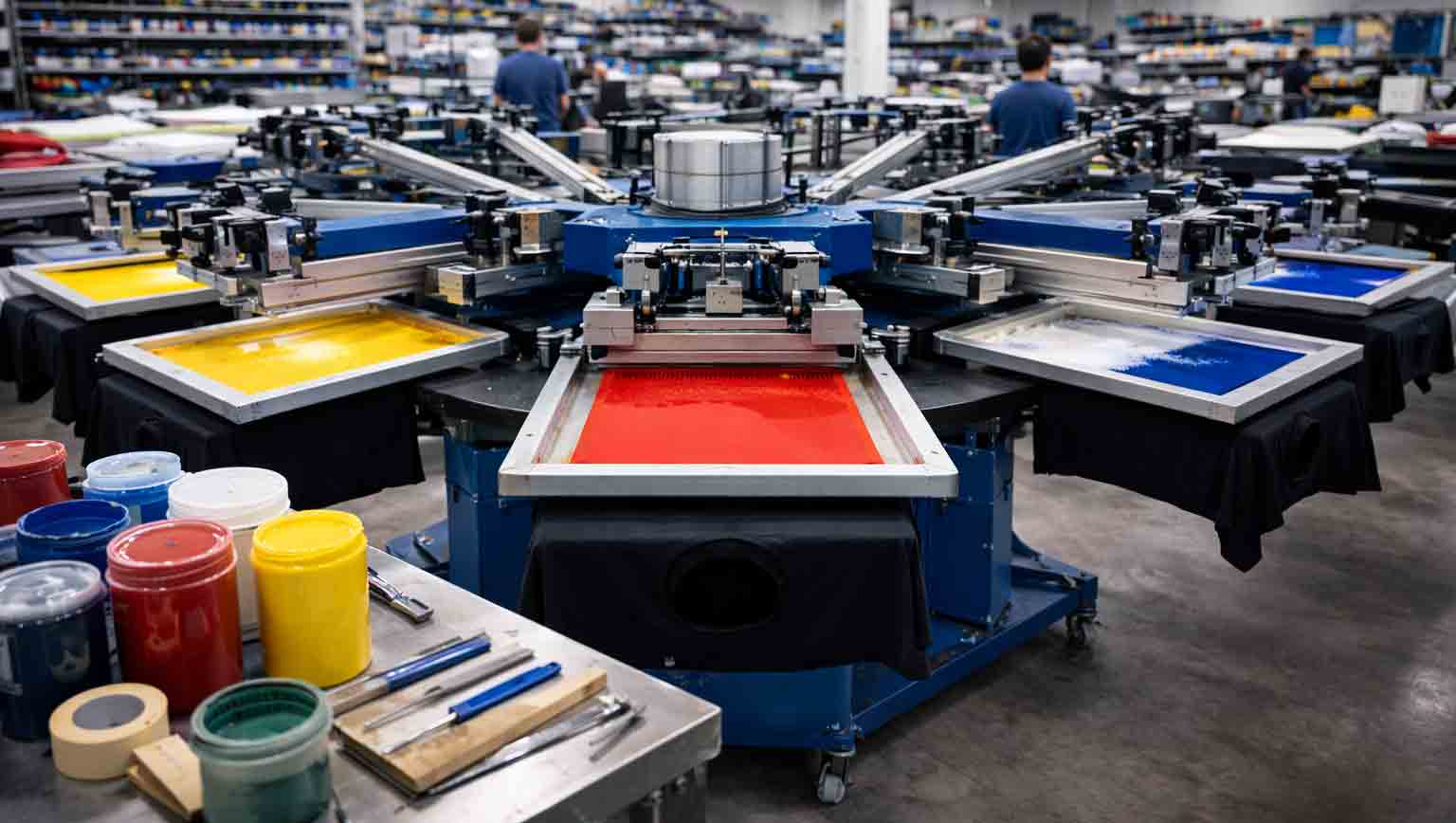
A screen is a mesh stretched in a frame. Parts of the mesh are blocked (the “stencil”), and the open areas let ink pass through. The printer floods ink on the screen, then uses a squeegee to push ink through the open mesh onto the garment below.
Each color typically needs its own screen. That’s why screen printing loves simple, bold designs and steady reorders: once the setup is right, repeating the same print across many pieces becomes efficient and consistent.
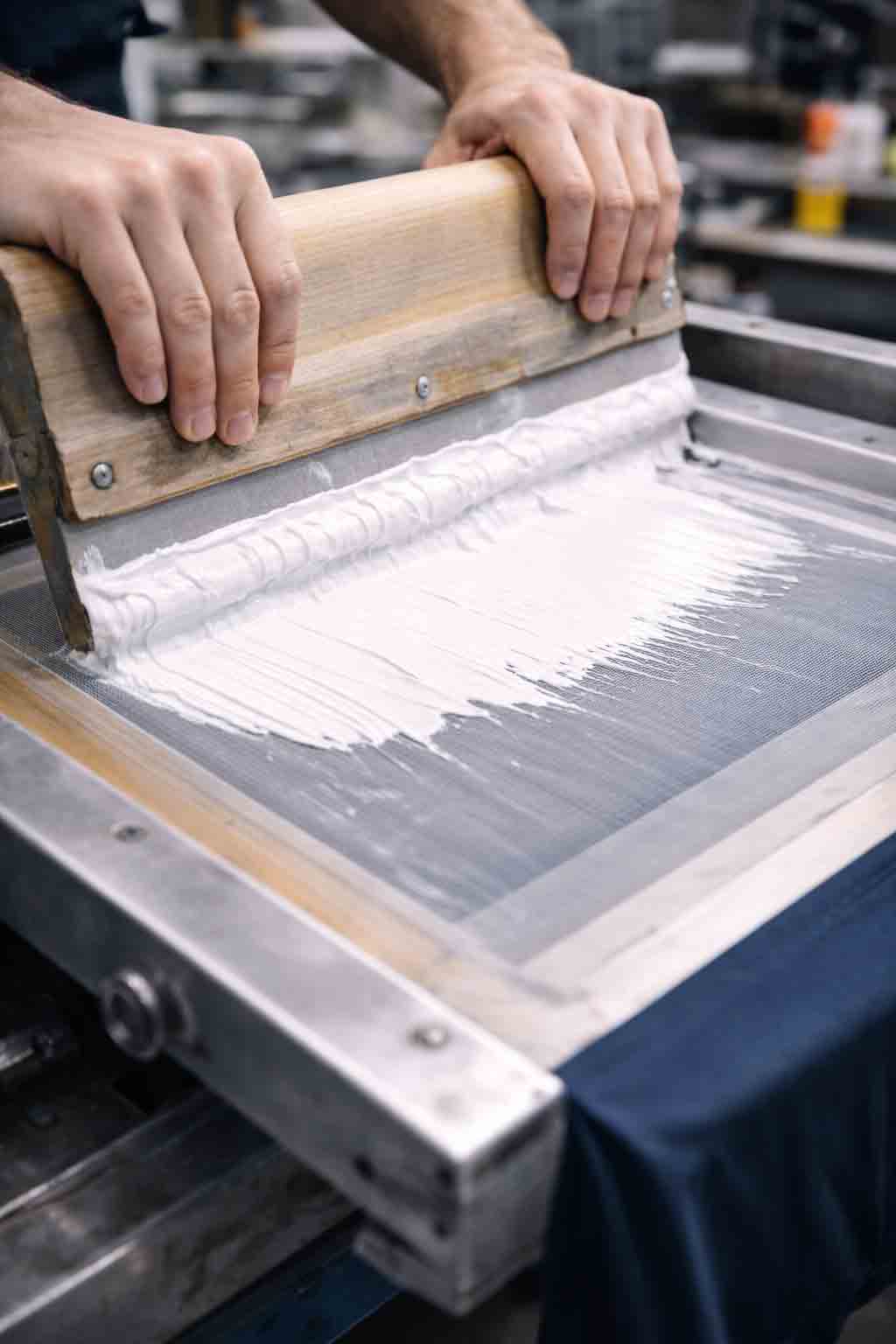
What screen printing is best for (and when it’s not)
Screen printing shines when you want strong, crisp graphics that can scale to bigger quantities. It’s also great when your brand has a “core design” you’ll print again and again—because consistency improves as the process becomes standardized.
Where it can be less practical is tiny orders with lots of color changes or constantly changing artwork. That’s not a “no,” it’s just a planning point: if you’re doing many unique designs, other methods may fit better for speed and flexibility.
Hands-on tip: for a broad audience, focus on bold placement (small chest mark + optional back print) and keep the color count controlled in your first collection.
Print feel and durability: what customers notice first
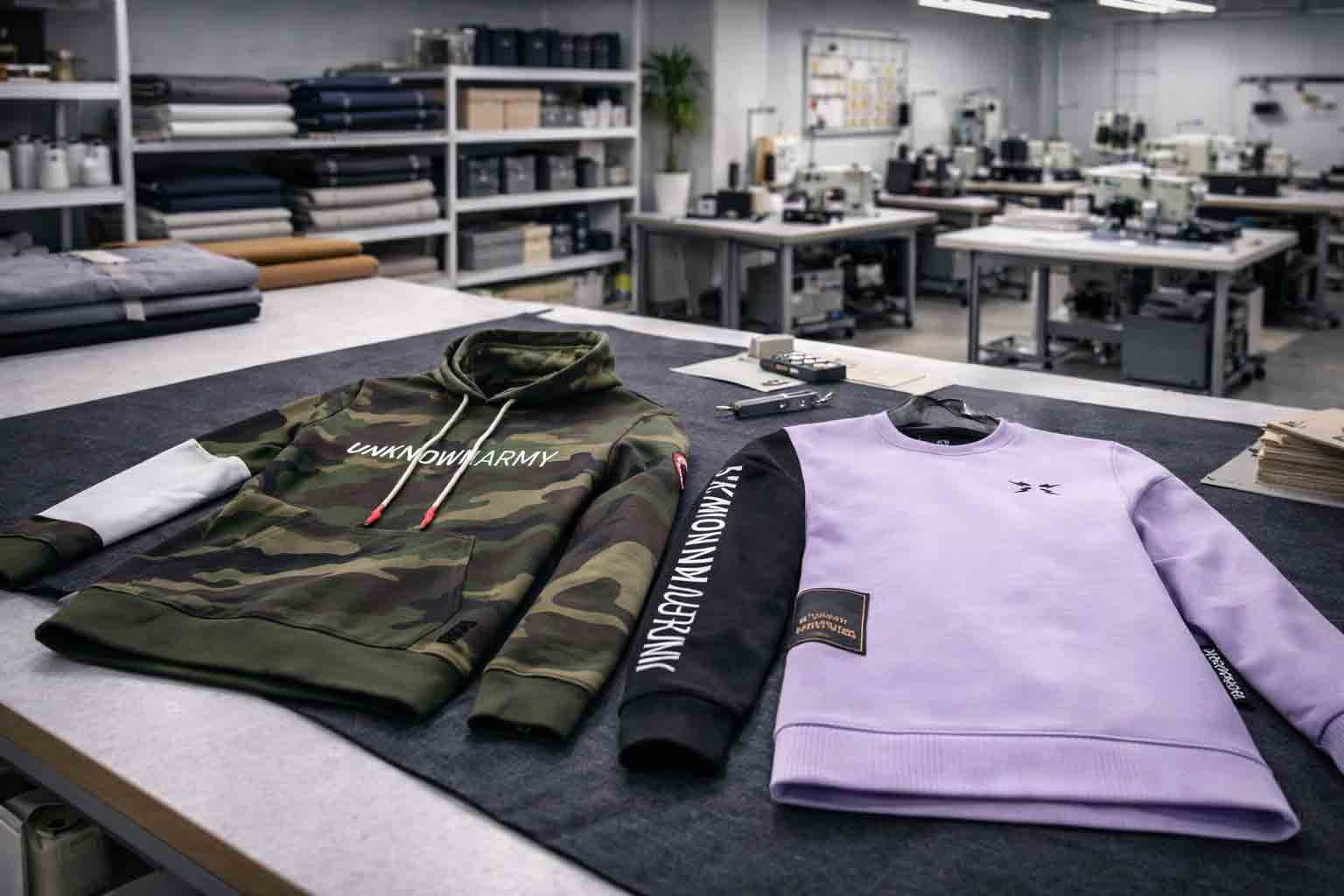
People judge prints by touch and by wash performance. A great print feels balanced with the garment: not too stiff, not too plasticky, and not prone to cracking. The “feel” depends on ink type, design coverage, and curing quality.
Durability comes from correct curing and smart design choices. Very large solid areas can feel heavier; smaller marks and breathable layouts often feel more premium and comfortable for everyday wear.
Costs and setup: why volume changes everything
Screen printing usually has upfront setup work: screens, alignment, test pulls, and color matching. That setup is why the method becomes more cost-effective as quantities go up. The more pieces you print of the same design, the more you spread setup effort across the run.
In commercial terms: screen printing often performs best for “repeatable collections” and event runs where you expect stable demand and reorders.
How Fabrikk helps brands run screen printing without the headaches
The biggest pain points in real production are inconsistent color, misalignment, and variable feel from batch to batch. Fabrikk helps you reduce those risks by planning a tight collection, matching artwork to the right process, and keeping quality checkpoints in place.
What brands typically want:
- Clean, repeatable results: prints that look the same on reorder #1 and reorder #10.
- Premium finishing: a feel that matches the garment quality.
- Practical SKU planning: fewer variants, higher confidence, less waste.
- QC that protects margins: fewer defects and fewer returns.
This turns screen printing into a scalable system instead of a one-off project.
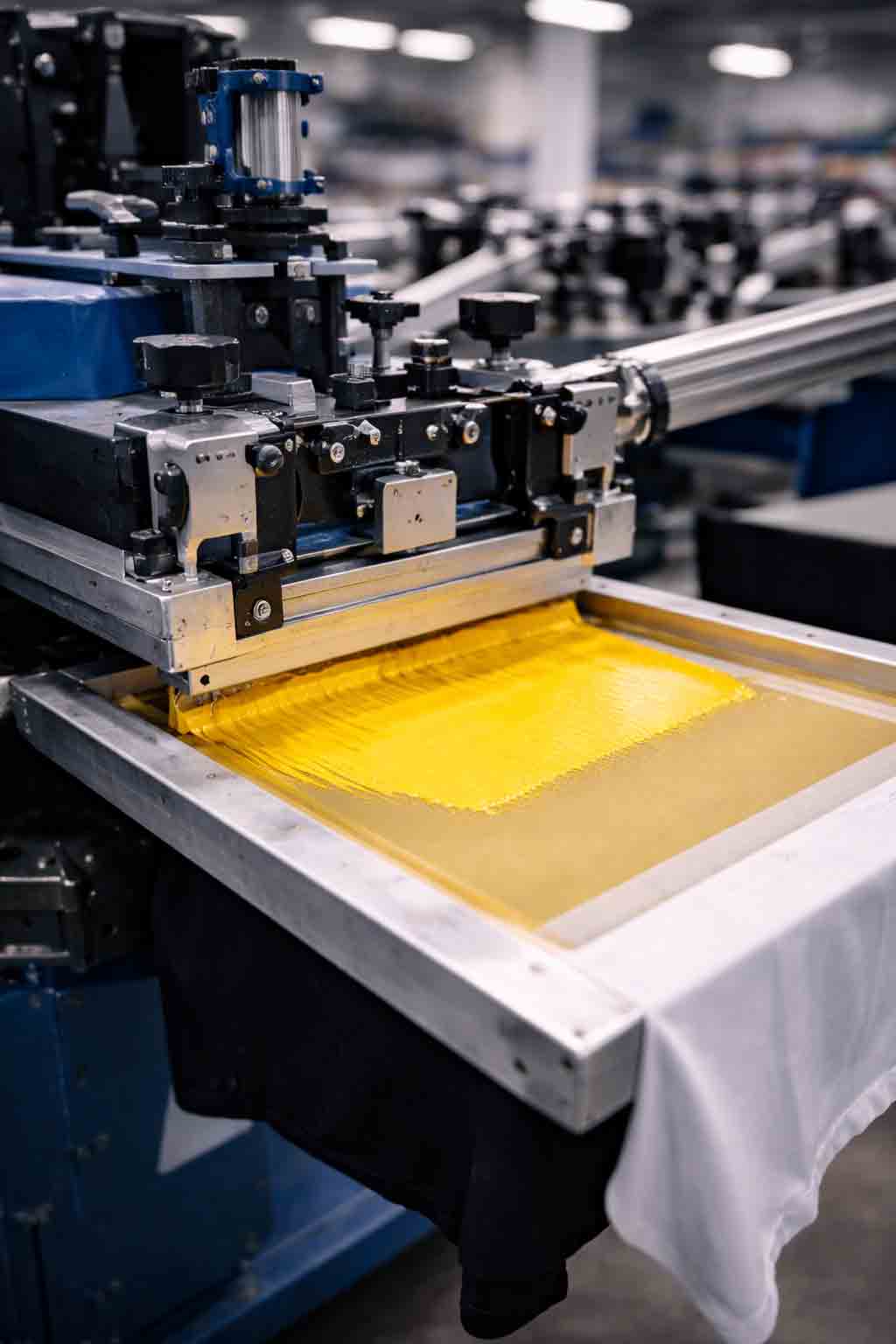
Practical setup checklist before you print
Use this checklist to keep your run clean, consistent, and commercially safe—especially on the first drop.
- Confirm the exact garment base (fabric blend, weight, color, sizing).
- Lock artwork files (vector where possible, proper separations, correct sizing).
- Decide your ink system (based on feel, durability needs, and garment type).
- Control color count (fewer colors usually means faster, cleaner production).
- Set print placement standards (chest, back, sleeve) and keep them consistent.
- Run test pulls and approve the final reference sample.
- Verify registration/alignment and edge sharpness on the test piece.
- Confirm curing settings and do a quick stretch + wash sanity check.
- Check ink deposit and hand-feel (avoid unnecessary heavy coverage).
- Define QC checkpoints (first-off approval, in-line checks, final inspection).
- Plan packing so prints don’t scuff during handling.
- Document the final settings for reorders (your future self will thank you).
If you treat this like a system, you’ll get more consistent results and fewer surprises when you scale.
FAQ: screen printing questions people ask most
Yes—especially for bold, repeatable designs and larger quantities. It’s a common choice for tees, hoodies, and event merch when consistency matters.
Each screen acts like a stencil for a single ink layer. Multiple colors usually mean multiple stencils layered in precise alignment.
It depends on ink type and design coverage. Small marks and breathable layouts can feel very comfortable; large solid blocks can feel heavier.
Very durable when cured correctly and printed on the right garment. Incorrect curing is a common cause of early wear issues.
Common causes are under-curing, overly thick ink deposit, stretching beyond the garment’s limits, or harsh washing and drying.
Not always—each method has strengths. Screen printing often wins for bold designs at volume; DTG/DTF can be more flexible for smaller runs and frequent artwork changes.
Many cotton and cotton-blend garments print well. The best choice depends on the feel you want and the ink system used.
Use a reference sample, standardize inks and settings, and document the final approved setup. Consistency comes from repeatable process control.
Blur can come from screen issues, registration problems, too much ink, wrong mesh choice, or movement during printing.
Yes, but it depends on mesh count, ink viscosity, and artwork prep. Fine detail is possible when the technical setup matches the design.
Tighten your setup: clean separations, controlled color count, proper curing, and consistent QC checks. Most quality jumps come from process discipline.
A simple background overview is available here: Screen printing (overview).
Wrap-up: when screen printing is the smart commercial choice
If you need bold, repeatable prints that scale with demand, screen printing is one of the most proven options in apparel production. And if you’re still asking “what is screen printing” in practical terms, it’s simply the method that rewards consistency: stable designs, controlled setup, and quality checks that keep your brand looking premium.